
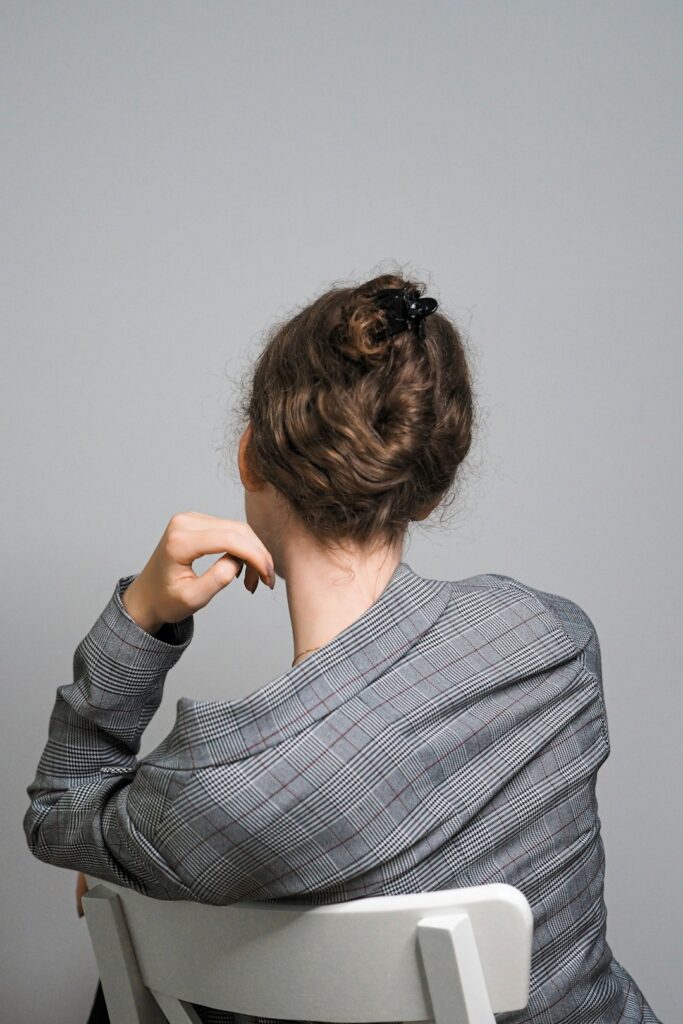
Tension headaches often feel like steady pressure, tightness, or a dull ache across the forehead, temples, back of the head, or neck. Gentle stretching may reduce muscle tightness and improve comfort, especially when headaches are associated with prolonged sitting, stress, jaw clenching, poor sleep, or cold-weather posture.
Stretching should feel mild and controlled. It should not cause sharp pain, dizziness, numbness, weakness, vision changes, or a noticeable increase in head pain.
What does a tension headache feel like?
A tension headache commonly causes pressure on both sides of the head rather than a strong, throbbing sensation on one side. The scalp, neck, shoulders, or jaw may also feel tender or tight.
Many people can continue normal activities with a tension headache, although concentration and comfort may be reduced. Symptoms may develop after hours of computer work, driving, reading, lifting, stressful situations, or sleeping with the neck in an awkward position.
Tension headaches are different from headaches that begin suddenly and severely or occur with neurological symptoms. Stretching is intended for mild, familiar symptoms—not for every type of headache.
Which stretches may help relieve neck and shoulder tension?
The following movements can be performed while seated or standing. Keep the spine relaxed, breathe normally, and move slowly.
Chin tuck
A chin tuck helps reduce the forward-head position that often develops during screen use or reading.
- Sit upright with the shoulders relaxed.
- Look straight ahead.
- Gently draw the chin backward, as if making a small double chin.
- Do not look down or force the head backward.
- Hold for 3 to 5 seconds, then release.
- Repeat 5 to 10 times.
The movement should create a mild sense of work in the front of the neck or a gentle stretch near the base of the skull. It should not cause neck pain.
Side neck stretch
This stretch targets muscles along the side of the neck.
- Sit tall and keep the right shoulder relaxed.
- Slowly tilt the left ear toward the left shoulder.
- Stop when a gentle stretch is felt along the right side of the neck.
- Hold for 15 to 20 seconds.
- Return to the center and repeat on the other side.
Avoid pulling the head with the hand. If the shoulder rises toward the ear, relax it and reduce the range of motion.
Neck rotation
Turning the head gently can help reduce stiffness from holding one position.
- Face forward with the shoulders level.
- Slowly turn the head to the right, only as far as comfortable.
- Pause for 5 to 10 seconds.
- Return to the center and repeat to the left.
- Complete 3 to 5 repetitions on each side.
The movement should be smooth rather than bouncy. A small range is appropriate if the neck feels stiff.
Upper-back stretch
Tension between the shoulder blades can contribute to an uncomfortable neck and head position.
- Sit or stand with the arms extended in front of the body.
- Interlace the fingers or place the palms together.
- Gently reach forward while allowing the upper back to round slightly.
- Keep the chin level rather than dropping the head.
- Hold for 15 to 20 seconds.
- Repeat 2 or 3 times.
This should create a mild stretch across the upper back, not a painful pulling sensation in the shoulders.
Shoulder rolls
Shoulder rolls can be useful after desk work, household tasks, or driving.
- Lift the shoulders gently toward the ears.
- Move them backward, then down.
- Complete 8 to 10 slow circles.
- Reverse the direction for another 8 to 10 circles.

Do not shrug forcefully. The purpose is to restore comfortable movement, not to fatigue the shoulder muscles.
Chest-opening stretch
Tight chest muscles can encourage rounded shoulders and forward-head posture.
- Stand in a doorway or sit near the edge of a chair.
- Draw the shoulders gently back and down.
- If standing, place the forearms lightly against the doorframe and step forward a small amount.
- Hold for 15 to 20 seconds.
- Repeat 2 or 3 times.
Keep the stretch moderate. A strong pull across the front of the shoulder is not necessary.
How often should these stretches be done?
For prevention, a short routine once or twice daily may be more useful than stretching only during a headache. People who work at a computer, study, drive frequently, or perform repetitive household tasks can also use brief movement breaks throughout the day.
A practical routine may take less than five minutes:
- Five chin tucks
- Three neck rotations in each direction
- One side neck stretch per side
- Ten shoulder rolls
- One upper-back stretch
During colder months, residents may spend more time indoors, wear heavier clothing, or hold the shoulders elevated against the cold. These habits can increase neck and shoulder stiffness. Gentle movement breaks can be useful after time spent shoveling, carrying winter clothing, sitting near a computer, or remaining in one position indoors.
Should stretching be done during a headache?
Gentle stretching may help if the headache is familiar and feels related to muscle tightness. Begin with one or two movements rather than completing a long routine. Slow breathing, a quiet environment, water, and a warm compress over the neck or shoulders may also improve comfort for some people.
Stop if stretching increases the headache, causes dizziness, produces tingling or numbness, or creates pain that travels into an arm. Do not force the neck into end-range positions or use fast, jerking movements.
Stretching may not help a migraine, sinus-related illness, infection, medication-overuse headache, or headache caused by another medical condition. Nausea, vomiting, marked light sensitivity, or a one-sided throbbing headache may suggest a different pattern that deserves separate evaluation.
What habits can reduce recurring tension?
Stretching works better when paired with regular movement and attention to daily habits.
Try changing position at least every 30 to 60 minutes. Stand, walk briefly, adjust the chair, or relax the hands and shoulders. Keep frequently used screens near eye level so the head does not remain angled downward.
Other factors that may contribute to recurring headaches include irregular sleep, dehydration, skipped meals, sustained stress, excessive caffeine, and frequent use of pain medicine. A simple headache diary can help identify patterns by recording sleep, meals, screen time, stress, weather exposure, activity, and symptoms.
Jaw clenching is another overlooked source of head and neck tension. During the day, allow the teeth to remain slightly apart, keep the tongue relaxed, and check whether the shoulders are creeping upward.
When should a headache receive medical attention?
Seek urgent medical care for a sudden, extremely severe headache or a headache accompanied by weakness, numbness, confusion, fainting, seizure, trouble speaking, double vision, fever, stiff neck, or a spreading rash. Medical attention is also needed after a head injury, particularly if the pain is worsening.
A routine medical evaluation is appropriate when headaches become frequent, change in pattern, interfere with normal activities, or require pain medicine repeatedly. Persistent neck pain, arm symptoms, or headaches that do not respond to reasonable self-care also warrant assessment.
For ordinary muscle-related tension, the safest approach is gentle movement, gradual stretching, and careful attention to warning signs. The goal is comfortable motion—not forcing the neck to stretch farther than it naturally allows.
